01 / 03
From Stonemason to Renaissance Master
Palladio was born in Padua, originally named Andrea di Pietro della Gondola, and began his apprenticeship as a stonemason at 13. At 16 he fled to Vicenza and joined the finest local stonemason’s workshop. At age 30, his life was utterly transformed by a humanist — Count Gian Giorgio Trissino discovered his talent and led him into the world of classical culture. Trissino gave him the name “Palladio” (from Pallas Athena’s angelic messenger in Greek wisdom) and took him repeatedly to Rome, where he measured and studied Roman ruins with his own hands.
Palladio was not an architect educated at a formal university but a self-taught stonemason who learned through practice. Yet it was precisely this origin that set him apart from his contemporaries: he did not pursue ornate Mannerism but a clear, replicable, economical, and practical design system. He transformed the plans of Roman baths, the Pantheon, and basilicas that he had surveyed in Rome into mass-producible residential types — which is why a provincial architect from Vicenza ultimately influenced the world.
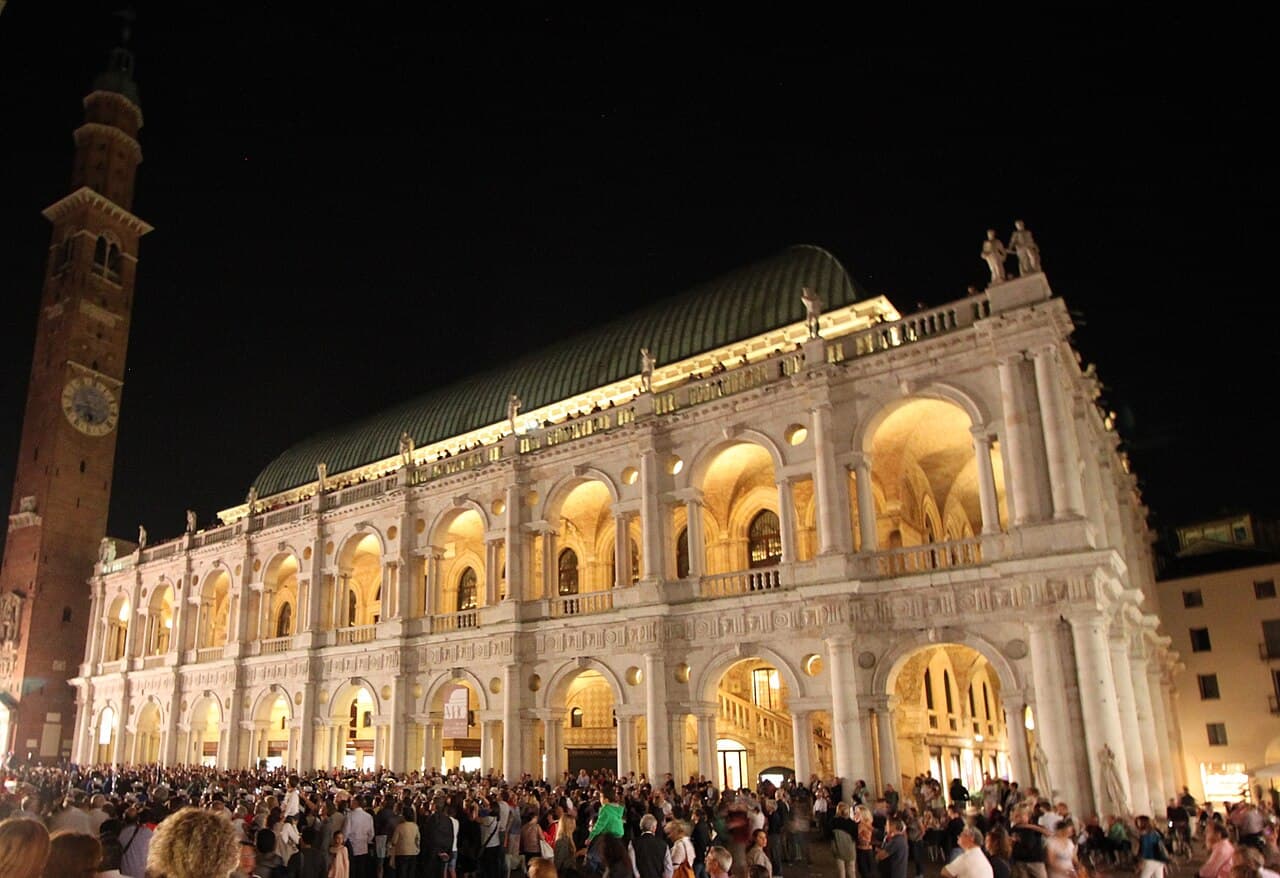
His first major breakthrough was the Basilica in Vicenza (Palazzo della Ragione, 1549), where he “wrapped” the existing Gothic hall with two stories of arcades, creating the classic composition later called the “Palladian Motif” — a large central arch flanked by two small rectangular openings on each side. This motif was reused for the next four centuries, from English country houses to the United States Capitol.