Archistory
HomeArchiveTime
Search
中文EN日本語

Archive

ArchitectsBuildingsTime

Periods

Classical EraMedievalRenaissanceBaroqueNeoclassicalIndustrial Revolution

Styles

Classical ArchitectureRenaissance ArchitecturePalladianismBaroque ArchitectureEnglish BaroqueMannerism

Search

Search architects or buildings...

Archistory © 2026
Archistory

Home/Architects/Fumihiko Maki

Fumihiko Maki

Portrait of Fumihiko Maki

Portrait of Fumihiko Maki

Wikimedia Commons / Herbert Behrens · CC BY-SA 3.0 · Source

Fumihiko Maki (1928–2024) is a pivotal figure bridging generations in Japanese modern architecture. Among the Metabolist members, he ultimately traveled the farthest — from bold experiments in collective form in his early years to a distinctive "quiet modernism." Maki’s architectural language is characterized by refined geometric forms, an extreme attentiveness to surfaces, and spatial depth (“oku”). His signature works include Spiral in Tokyo, the National Museum of Modern Art, Kyoto, and 4 World Trade Center in New York. He received the Pritzker Prize in 1993, becoming the second Japanese architect so honored (Kenzō Tange never won). Maki’s design never chases iconic visual impact but rather pursuits "growing through time" — a conviction that makes him one of the most enduring voices in Japanese modern architectural ethics.

Life span1928 – 2024Nationality / RegionJapan
Portrait of Fumihiko Maki

Portrait of Fumihiko Maki

Wikimedia Commons / Herbert Behrens · CC BY-SA 3.0 · Source

Ideas

01

Collective form and "oku" — architecture is not an isolated object but a member of a group. Maki’s early Metabolist research concerned how numerous similar units can organically compose a larger whole

02

Depth of surface — the façade is not merely a glass-and-steel membrane but a layered veil with depth, shadow, and texture. Aluminum panels, perforated metal, ceramic panels — the reflectivity and transparency of each material is precisely calculated

03

The time dimension of architecture — a building should accommodate unpredictable changes over coming decades. Maki’s designs often contain "flexible frameworks" — allowing internal functional shifts without compromising external formal integrity

04

Quiet architecture — by the late 20th century, novelty-seeking had become mainstream in the architectural world. Maki chose a more restrained path: his buildings do not shout, but they endure persistently in the city

Architect dossier

03

01 / 03

From Metabolism to quiet modernism

Fumihiko Maki was born in Tokyo in 1928. After graduating from the University of Tokyo’s Department of Architecture in 1952, he went to the United States for further study: first at Cranbrook Academy of Art, then earning a master’s at the Harvard Graduate School of Design (GSD). From 1956 to 1958 he taught at Washington University in St. Louis, then joined SOM’s New York office — where he encountered the production methods of American corporate architecture. But Maki’s thinking truly crystallized after returning to Japan in the 1960s. He joined the Metabolist movement, co-authoring the "Metabolism 1960" manifesto with Kiyonori Kikutake, Kisho Kurokawa, and others. Yet even then, Maki’s voice was calmer than his peers’. His concept of "Collective Form" — how individual buildings can compose a larger whole through spatial rhythmic relationships — belonged to the Metabolist ambit but was already far more pragmatic and enduring than Kurokawa’s capsule architecture or Kikutake’s aerial cities.

After the 1970 Osaka Expo, the Metabolist movement gradually declined. Maki did not linger in utopian fantasies. He returned to a quieter but equally radical question: how to continue doing modernism in a world already full of it? His answer: make modernism gentler. Hillside Terrace in Daikanyama (1969–1992) is the laboratory of this transitional period — a mixed-use development built in six phases, containing residences, commercial spaces, cultural venues, and public courtyards. Each phase reflects Maki’s latest understanding at the time of materials, scale, and public space. This building has no single "iconic photograph," but it is perhaps one of Tokyo’s most beloved modern architectural ensembles — in a city known for noise and density, Hillside Terrace offers an almost improbable serenity. Daikanyama proved Maki’s conviction: architecture can be dialogue, not manifesto.

The 1980s were Maki’s phase of internationalization. The Spiral Building (1985, Aoyama, Tokyo) is among his best-known works — a mixed-use cultural complex containing a gallery, multipurpose hall, restaurant, and offices. Its façade creates complex reflective and transparent effects through combinations of aluminum panels and glass, while the internal spiral ramp suggests movement and ascension. Spiral’s formal language is bolder than Hillside Terrace, yet it retains Maki-esque restraint: it seamlessly integrates with Aoyama’s street scale, never attempting to overwhelm its surroundings. In 1986, the National Museum of Modern Art, Kyoto opened in the Nishijin district — this building parses modern exhibition requirements through the traditional Japanese lattice (kōshi) motif, localizing international modernism with a deeply Kyoto sensibility.
02 / 03

International stage: 4 WTC and the Pritzker

In 1993 Fumihiko Maki received the Pritzker Architecture Prize. The jury citation noted: "He is an artist of minimalism, but not a minimalism that tends toward silence — his architecture has warmth, texture, and concrete memories that belong to this city." Maki was the second Japanese architect to win the prize, after Kenzō Tange in 1987. But unlike Tange, Maki never designed any government building or national project — his works are mostly private commissions, a fact that itself serves as an interesting footnote on postwar Japan’s architectural industry ecology: one of the most internationally recognized Japanese architects was never entrusted with a single national project at home. Maki himself expressed no bitterness. In his acceptance speech he said: "Architecture does not need grandness. In Tokyo, the greatest architecture might be the small-scale surprises hidden in narrow streets."

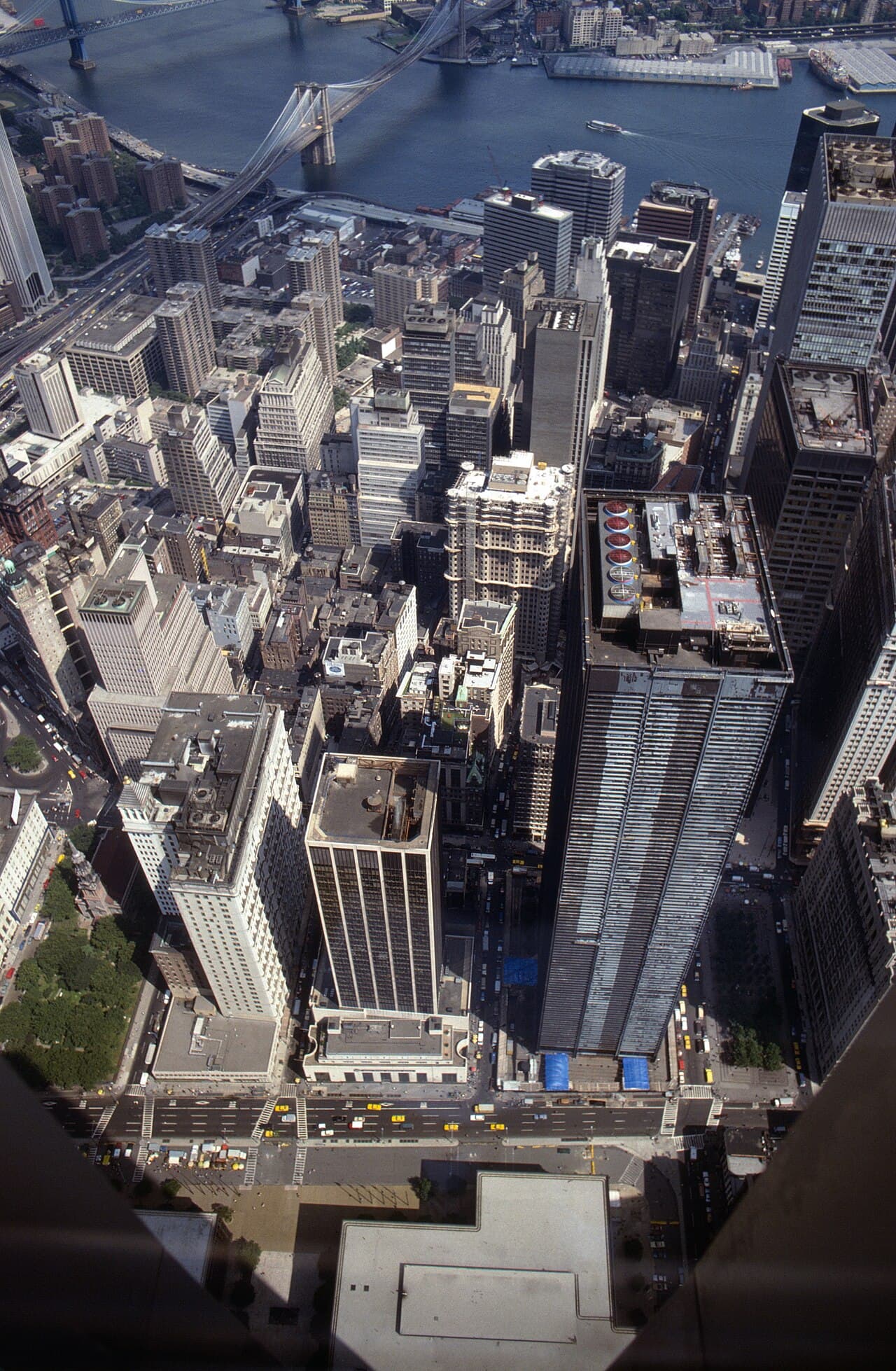
In 2013 Maki completed the design of 4 World Trade Center (4 WTC) in New York. Standing 297 meters (975 feet) tall, this glass tower occupies a corner of the WTC complex, adjacent to Santiago Calatrava’s PATH station. 4 WTC’s façade is composed of a series of tilted glass panels that produce subtle variations of light at different angles of the sky — what Maki called "nuances of light." The building stands in sharp contrast to surrounding WTC towers: it pursues no height record, belongs to no architectural style, and has no recognizable "iconic" silhouette. Yet on a site defined by tragedy and politics, Maki’s 4 WTC provides a certain rare quality: dignity.

Fumihiko Maki died in Tokyo on June 6, 2024, at age 95. His passing marks the departure of the last major figure of the Metabolist generation. But his architecture has not departed: Hillside Terrace still welcomes hundreds of residents and visitors every weekend, Spiral remains one of Aoyama’s most vibrant cultural centers, and the glass façade of 4 WTC still shifts subtly in the Manhattan sky. Maki lived long enough to see his own buildings become part of history — for an architect, perhaps the greatest luxury.

03 / 03

Teaching and writing: the inner life of an architect

Fumihiko Maki may have been one of postwar Japan’s most important architectural educators, yet this contribution is often overshadowed by his practice. From the 1960s, Maki taught at Harvard, the University of Tokyo, and Washington University in St. Louis. In 1987 he founded his own firm (Maki and Associates) while continuing to teach. For Maki, teaching was not a "retirement option" but a parallel dimension of architectural practice. His seminar at the University of Tokyo became an intellectual cradle for a generation of Japanese architects. His published works — "Nurturing Dreams," "Collected Essays" — are not ordinary monographs but philosophical treatises on architecture, cities, and time. Maki’s capacity to handle words is rare among architects: his English writing is fluent, precise, and never resorts to architectural-jargon smoke screens.

Maki’s core conviction about architectural education was this: architecture cannot be learned only through architecture. He encouraged students to read literature, philosophy, and social sciences — because if architects do not understand the world their buildings will serve, they cannot design meaningful architecture. He once said in a lecture: "When I design a museum, I am not designing a container. I am designing a meeting point of light and silence. And this meeting point can only be designed after understanding what light and silence mean in human life." This humanistic approach makes Maki one of the most respected thinkers in architecture today. He even influenced architects who never worked in his office: SANAA’s Kazuyo Sejima once cited Maki’s writings as an important source of inspiration.

Maki’s legacy extends beyond architecture itself. In a culture increasingly defined by social-media images and fifteen-second videos, Maki’s "quiet architecture" may seem anachronistic. But perhaps that is precisely why it is more precious. As he once said in an interview: "The fastest architecture is not necessarily good architecture. Architecture needs time — not construction time, but time to be understood. Great architecture may take a century to be truly understood." Fumihiko Maki proved with ninety-five years of life: architecture can be a form of slowness in a fast world — a resistance, and simultaneously a gift.

Sections

  1. 01From Metabolism to quiet modernism
  2. 02International stage: 4 WTC and the Pritzker
  3. 03Teaching and writing: the inner life of an architect

Reading the works

4 World Trade Center

4 World Trade Center

The quietest tower in the WTC complex, where tilted glass panels shift continuously beneath the Manhattan sky.

4 World Trade Center→
Aga Khan Museum

Aga Khan Museum

2014

Toronto’s temple of Islamic art — pure white geometries reflected in water, the building itself a precise calculation of light and silence.

Aga Khan Museum→
Reinhard Ernst Museum

Reinhard Ernst Museum

2024

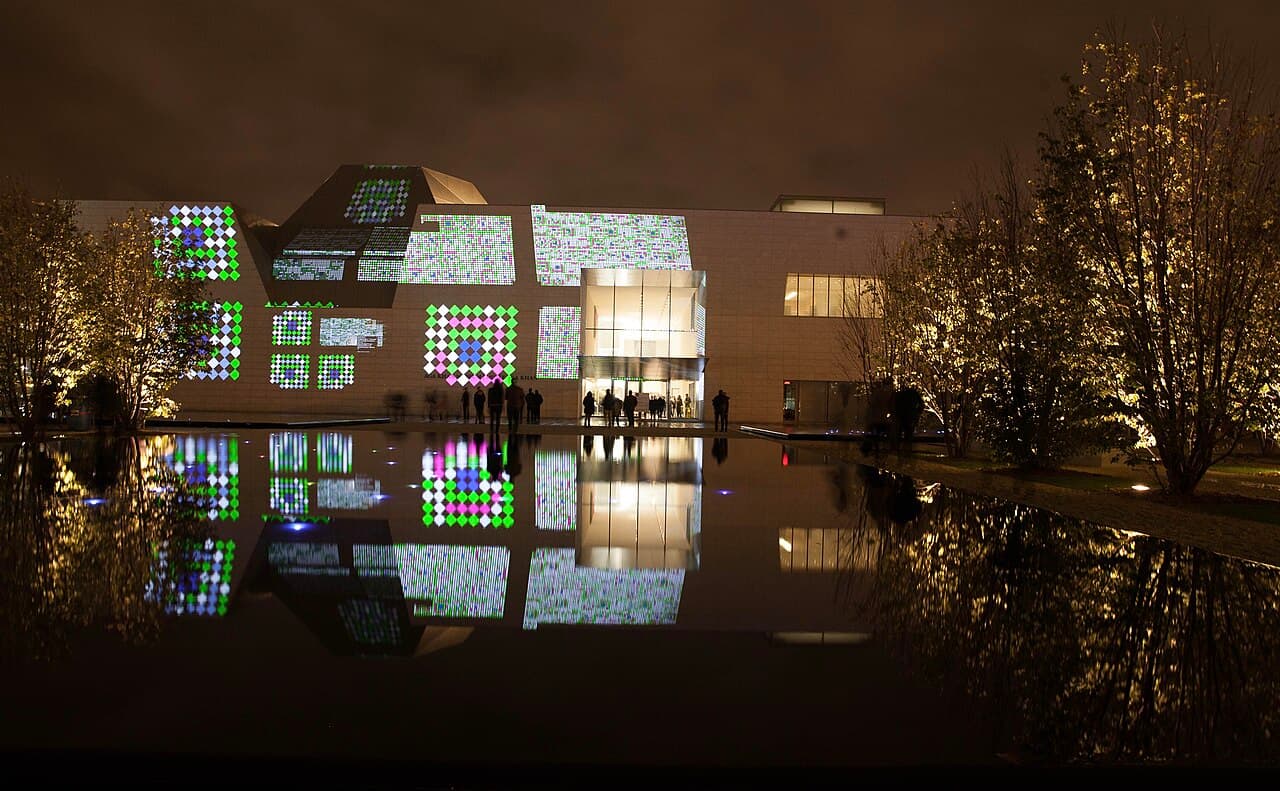
Maki’s swan song — an abstract art museum in Wiesbaden whose minimalist white volumes provide contemplative spaces for abstract painting.

Reinhard Ernst Museum→

Sources

  • The Pritzker Architecture Prize: Fumihiko Maki
  • Maki and Associates Official Site
  • Wikidata: Fumihiko Maki

Works

25 buildings

1956Tokyo Metropolitan Gymnasium
1963National Museum of Modern Art, Kyoto
1968Japanese Sword Museum
1983Iwasaki Art Museum
1985Spiral
1986Makuhari Messe
1989Toyama Shimin Plaza
1999Toyama International Conference Center
2003Toki Messe
2007Shimane Museum of Ancient Izumo
2014Aga Khan Museum
2024Reinhard Ernst Museum
?Dentsu Osaka Building
?TV Asahi headquarters
?Q121056036

All works

Toki Messe

Toki Messe

2003

Dentsu Osaka Building

Dentsu Osaka Building

Iwasaki Art Museum

Iwasaki Art Museum

1983

TV Asahi headquarters

TV Asahi headquarters

Toyama Shimin Plaza

Toyama Shimin Plaza

1989

Makuhari Messe

Makuhari Messe

1986

Untitled

Untitled

4 World Trade Center

4 World Trade Center

Tokyo Metropolitan Gymnasium

Tokyo Metropolitan Gymnasium

1956

Aga Khan Museum

Aga Khan Museum

2014

National Museum of Modern Art, Kyoto

National Museum of Modern Art, Kyoto

1963

TEPIA

TEPIA

Untitled

Untitled

Ebisu East Park Toilet

Ebisu East Park Toilet

Taipei Twins

Taipei Twins

Sakai City Semboku Suemura Archaeological Museum

Sakai City Semboku Suemura Archaeological Museum

Reinhard Ernst Museum

Reinhard Ernst Museum

2024

Toyama International Conference Center

Toyama International Conference Center

1999

Spiral

Spiral

1985

BLUE FRONT SHIBAURA

BLUE FRONT SHIBAURA

Nagano City Arts Center

Nagano City Arts Center

Shimane Museum of Ancient Izumo

Shimane Museum of Ancient Izumo

2007

51 Astor Place

51 Astor Place

Japanese Sword Museum

Japanese Sword Museum

1968

Kirishima International Concert Hall

Kirishima International Concert Hall