Archistory
HomeArchiveTime
Search
中文EN日本語

Archive

ArchitectsBuildingsTime

Periods

Classical EraMedievalRenaissanceBaroqueNeoclassicalIndustrial Revolution

Styles

Classical ArchitectureRenaissance ArchitecturePalladianismBaroque ArchitectureEnglish BaroqueMannerism

Search

Search architects or buildings...

Archistory © 2026
Archistory

Home/Architects/David Chipperfield

David Chipperfield

Portrait of David Chipperfield, 2012

Portrait of David Chipperfield, 2012

Unknown · CC BY-SA · Source

David Chipperfield (1953– ) is the quietest master of contemporary British architecture. In an era when star architects compete to produce iconic forms, he chose the opposite path: reduction, silence, letting architecture step back behind historical context and everyday experience. He established his global reputation with the restoration of the Neues Museum in Berlin (2009) — not overwhelming the "old" with the "new" but letting war scars and the original building's dignity tell a shared story about time. The 2023 Pritzker Prize honored his "consistently elegant public buildings," but Chipperfield's true singularity is this: his architecture always creates dignity for the place it occupies, rather than demanding attention from it.

Life span1953 – PresentNationality / RegionUnited Kingdom
Portrait of David Chipperfield, 2012

Portrait of David Chipperfield, 2012

Unknown · CC BY-SA · Source

Ideas

01

Subtraction not addition — creating meaning not by adding elements but by removing the unnecessary, simplifying to essence. Chipperfield's buildings often feel as if "they should have always been here"

02

Restoration as creation — the restoration of historic buildings is not archaeological reconstruction but a contemporary creative act. There must be an honest boundary between old and new, but also a meaningful dialogue

03

The dignity of the everyday — good architecture need not overwhelm; it should make everyday life better. Museums, libraries, courthouses — these civic buildings should provide a quiet sublimity within the quotidian

04

Contemporary continuation of European tradition — Chipperfield's buildings echo with the DNA of classical proportion, axis, and colonnade, but these are translated into an extremely simplified modern language, without nostalgic decoration

Architect dossier

03

01 / 03

Neues Museum: Architecture on a wound

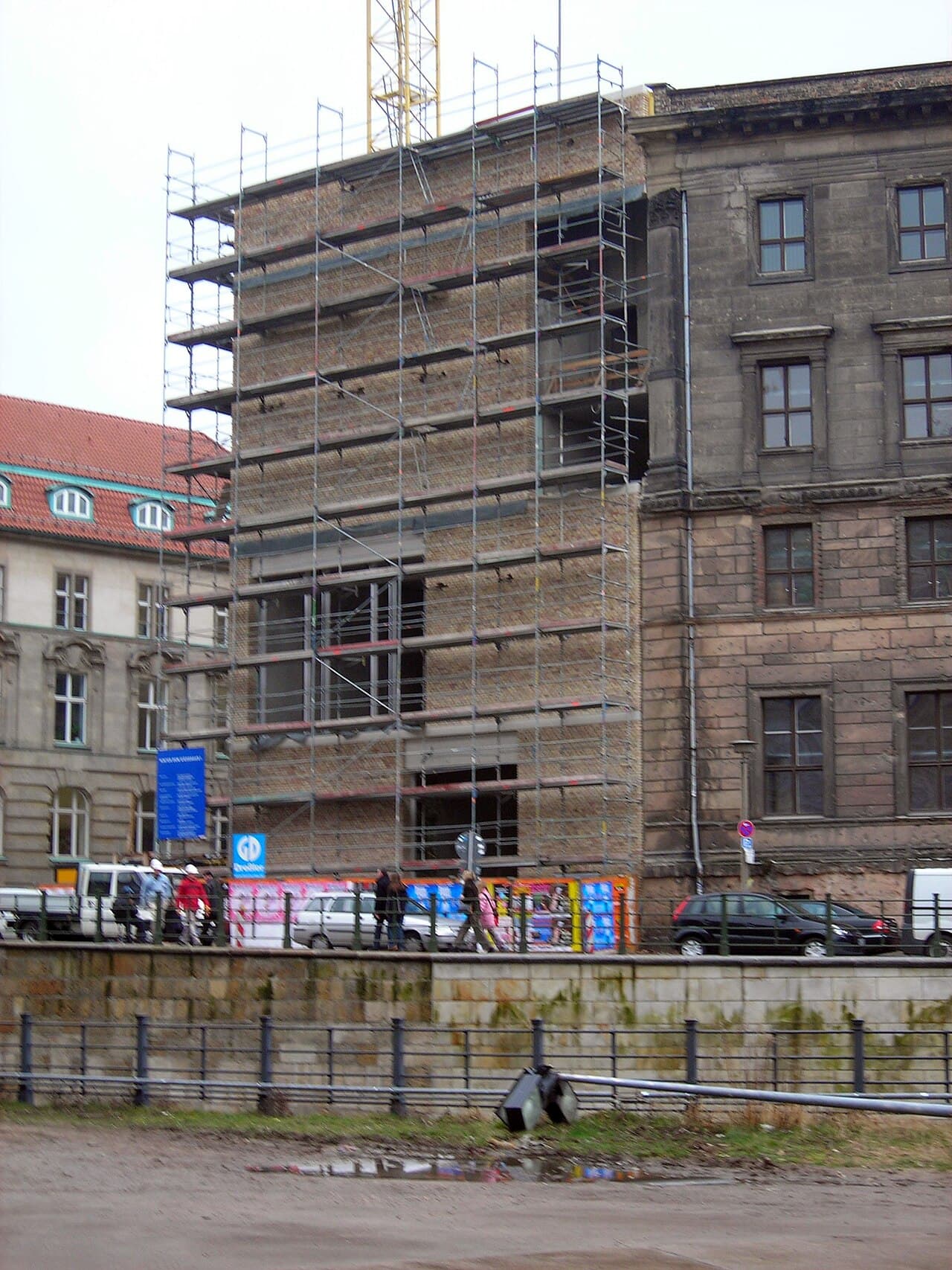
The Neues Museum in Berlin (1843–1855, designed by Friedrich August Stüler) was largely destroyed by aerial bombardment during WWII. For over half a century afterward, it stood as a ruin on Berlin's Museum Island — roof collapsed, stair hall completely vanished, murals covered in water stains and mold. In 1997, Chipperfield won the international competition to restore the building. This was no ordinary "restoration" project: the bombed-out ruin was not a mistake to erase but a "co-author" of the new architecture.

Chipperfield's methodology was termed "integrated repair." He did not attempt to return the building to its pre-war state (that would be a forgery), nor did he cap the ruin with an entirely new structure (that would be arrogance). He chose a third path: preserving and stabilizing all historical material — bullet-pocked brick walls, smoke-stained ceilings, faded mural fragments — and then filling gaps with precise but understated new material. New and old never merge: new colonnades use recycled brick and pale cement, forming a sober dialogue with surviving historical brickwork. The new stair hall uses clean white concrete and stone — simplified nearly to disappearance, so that the surviving mural fragments of Friedrich Wilhelm IV become the protagonists.

When it reopened in 2009, the Neues Museum triggered an unprecedented experience: a visitor sees simultaneously, within a single space, the layering of three eras — 19th-century classicism, the violence of 20th-century war, and the restrained repair of the 21st century. This is no longer "restoration" but "redaction" — Chipperfield behaved like a chronicler, allowing time to leave legible traces in the architecture. In this sense, the Neues Museum is one of the most profound answers to the question of "how to build in history" since the 20th century.
02 / 03

Civic architecture: The sublime everyday

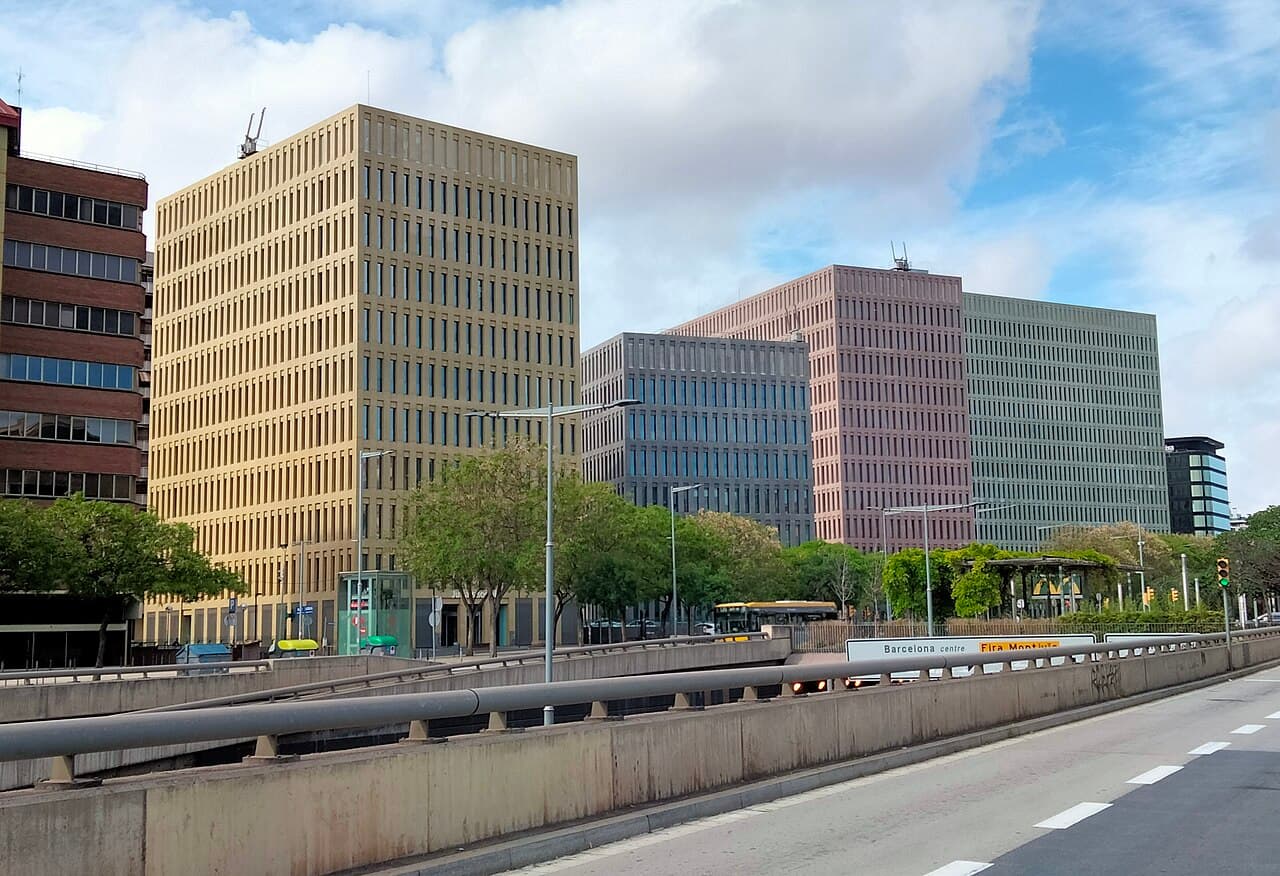
If the Neues Museum established Chipperfield's position in the field of restoration, his new-build works demonstrate another gift: creating dignity for civic life. The Ciutat de la Justícia in Barcelona (2002–2009) is a vast courthouse complex — in a city known for Gaudí and Catalan Modernism, a "cold" concrete courthouse might seem out of place. But Chipperfield's strategy is not to compete with Barcelona's color and form but to offer contrast: massive cantilevered volumes, a repetitive square-window rhythm, colorless concrete surfaces — justice needs to look just, and justice needs no decoration.

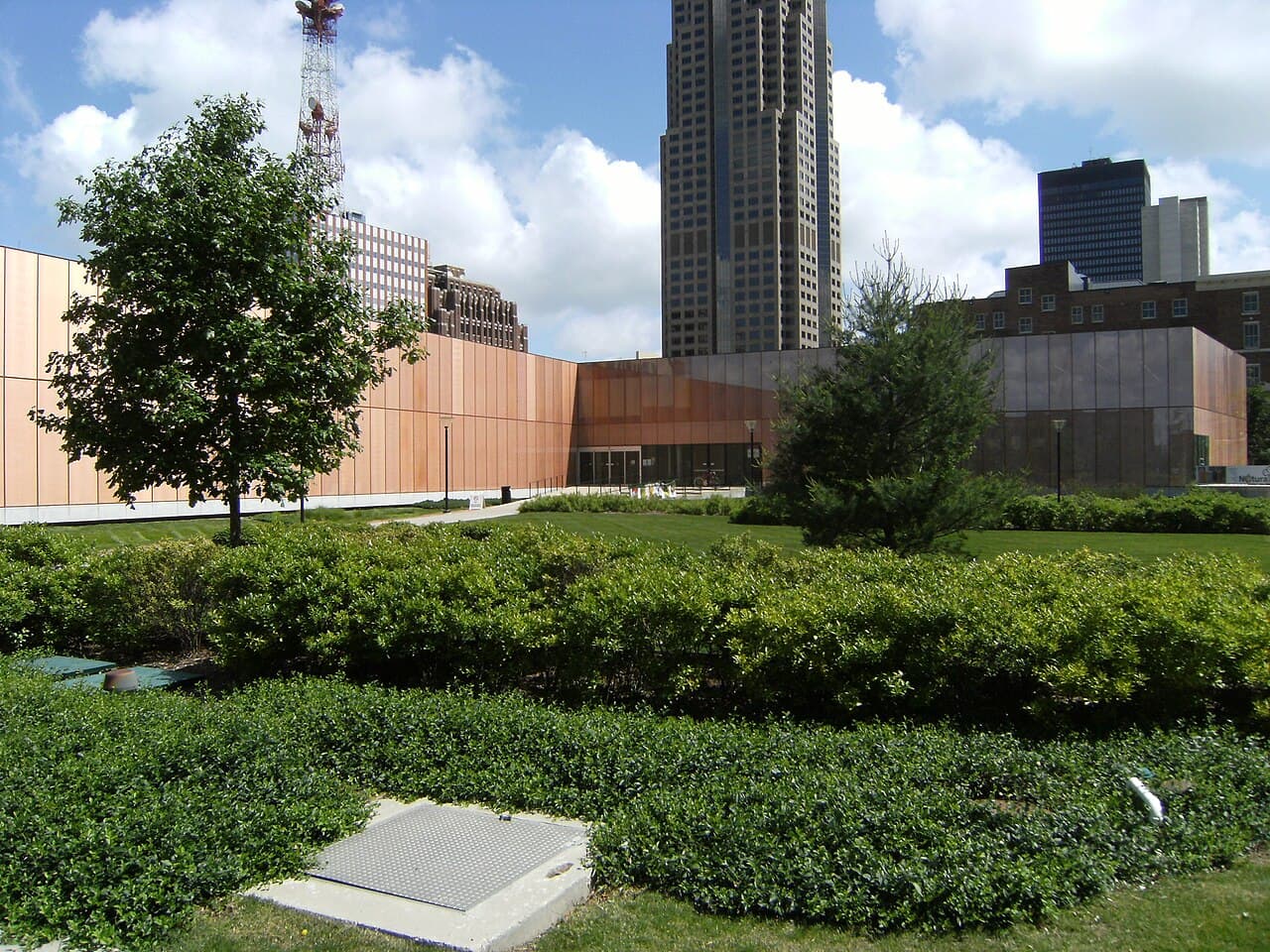
The Des Moines Central Library in Iowa (2006) and the Museum of Modern Literature in Marbach, Germany (2006) represent two directions of Chipperfield's civic architecture. The Des Moines Library is a rectangular volume clad in copper-tinted glass curtainwall — transparent yet introverted, reflecting the soft light of the Midwestern plains under Iowa's vast sky. The Museum of Modern Literature is a "windowless" concrete sanctuary, interior light coming entirely from skylights — the experience of entering it is like stepping from everyday life into a contemplative time-space. Both buildings refuse to provide "icons" for the city skyline, yet each creates a simple but dignified spatial experience for its users — readers or visitors.

The 2023 Pritzker Prize citation reads: "We did not choose an architect who is considered high-tech, iconic, flamboyant, or revolutionary. We chose an architect who is committed to making architecture have a positive impact on society." This statement captures Chipperfield's unique position with precision: in an attention economy, his architecture does not seek attention, yet it has established an unshakeable quality standard for civic space. His influence is visible in newly built public buildings worldwide — more and more museums, libraries, and courthouses are choosing austere, durable materials and clear spatial sequences, Chipperfield's intangible legacy.

03 / 03

The ethic of architecture: Why "not enough" is enough

In his 2023 Pritzker Prize acceptance speech, Chipperfield made a quiet but sharp argument: the problem with contemporary architecture is not "not enough" but "too much." Too much uniqueness, too much expressive desire, too much architect ego. In his words: "We don't need another 'important' building. We need a 'good' building." This can be understood as a call for architectural ethics — the architect's ego should not be larger than the community the architecture serves.

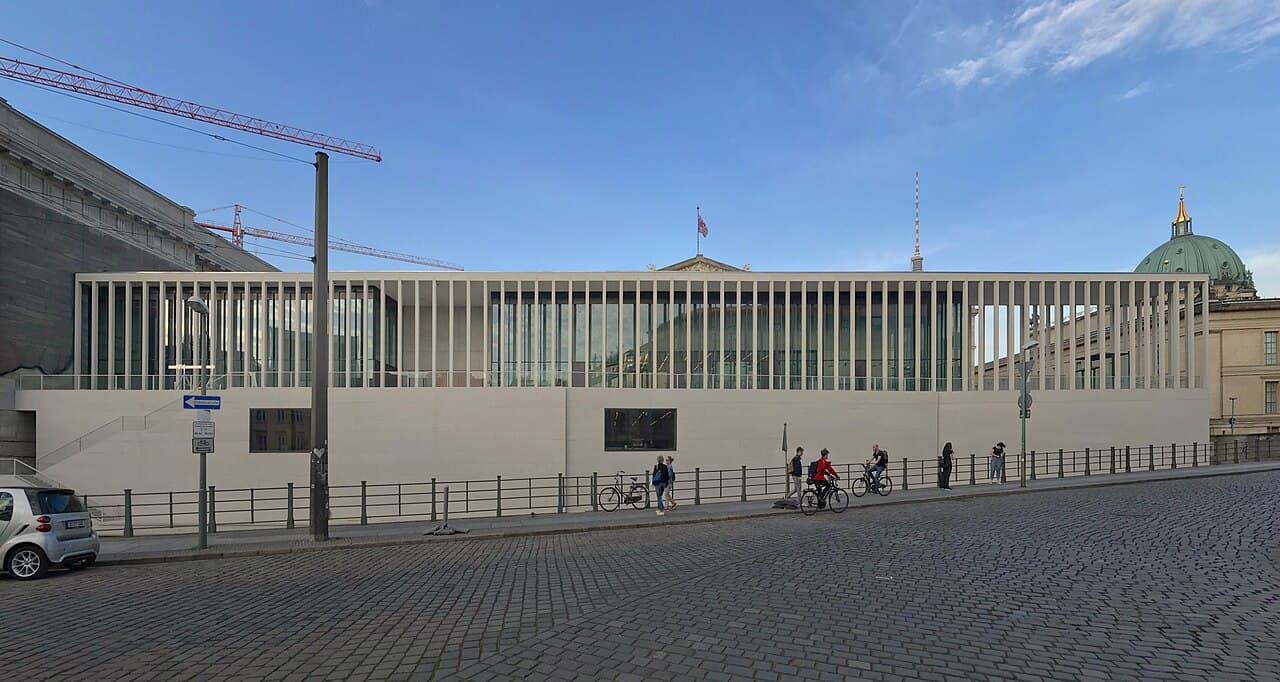
His James Simon Gallery (2019, Berlin Museum Island) is the ultimate expression of this ethic. As the "entrance building" for Museum Island, its task is to welcome millions of annual visitors, yet it has almost no visible "appearance": the building body is largely buried underground, leaving above ground only a slender row of white colonnades — a minimalist echo of the 19th-century classical museum colonnade — and a broad public stairway. This is not humility but a conviction about architecture's proper scale: in a place with the Pergamon Altar and the cathedral, the new building's appropriate role is background, not protagonist.

Chipperfield's influence is also generating a "school": more and more young architects are rejecting the star-architect model, choosing quieter relationships with history, material, and everyday experience. This is perhaps his most lasting legacy — not a specific building but an attitude: architecture can be a blank sheet of paper on which life writes itself. In an era of ubiquitous images, this is a near-radical aesthetic position.

Sections

  1. 01Neues Museum: Architecture on a wound
  2. 02Civic architecture: The sublime everyday
  3. 03The ethic of architecture: Why "not enough" is enough

Reading the works

James Simon Gallery

James Simon Gallery

2019

The ultimate restraint for a Museum Island entrance building — largely buried, leaving only a white colonnade as a classical echo.

James Simon Gallery→
Museum of Modern Literature

Museum of Modern Literature

2006

A "windowless" concrete literary sanctuary, interior lit only from skylights — entering it is like stepping into a contemplative time-space.

Museum of Modern Literature→
Colección Jumex

Colección Jumex

2013

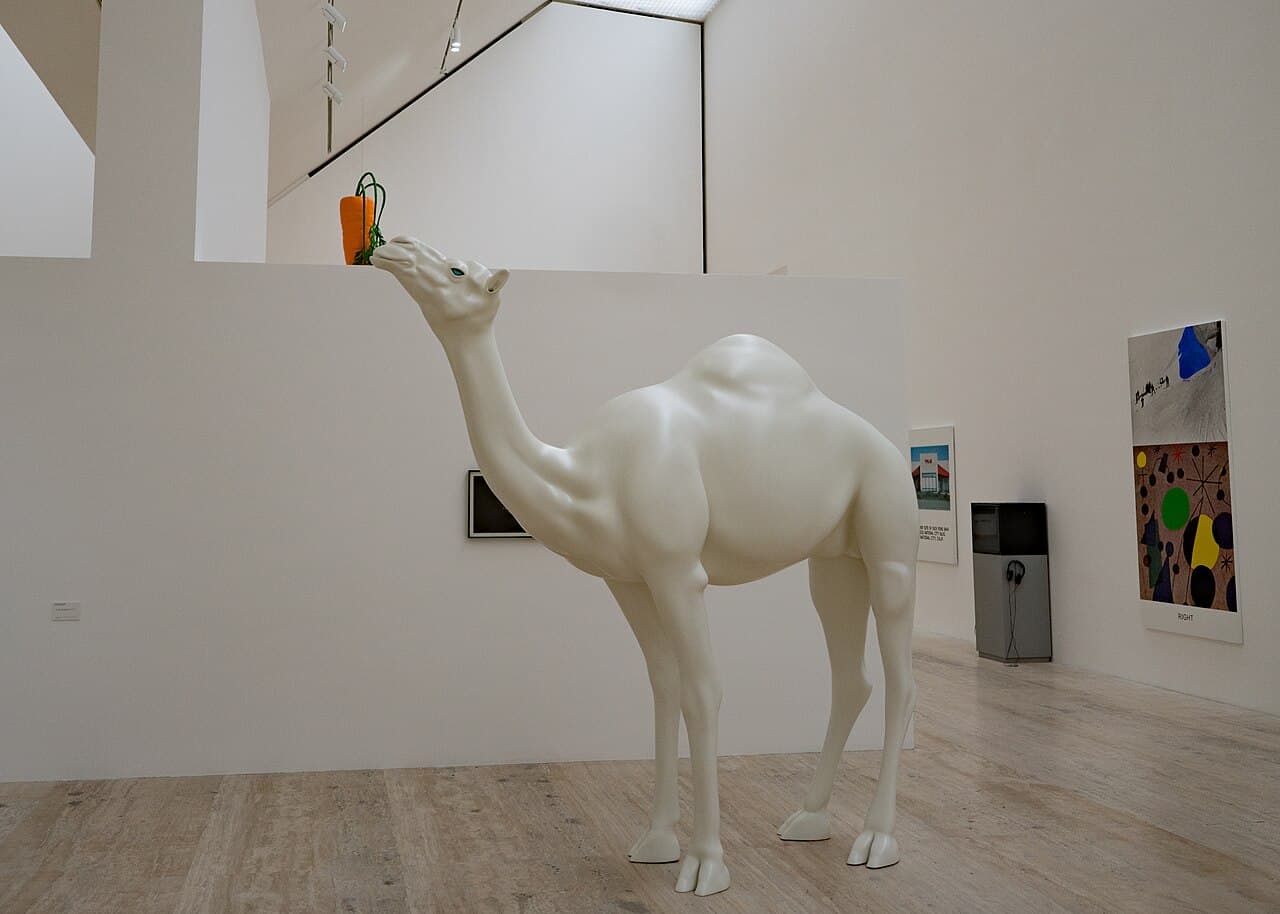
A sawtooth-roofed "white box" in Mexico City with local stone floors — existing for art, not for the architect.

Colección Jumex→

Sources

  • The Pritzker Architecture Prize: David Chipperfield
  • Encyclopaedia Britannica: David Chipperfield
  • Wikidata: David Chipperfield
  • David Chipperfield Architects

Works

22 buildings

1879Saint Louis Art Museum
1960Foundation E.G. Bührle Collection
19871 Cobham Mews Studios
2002Ciutat de la Justícia de Barcelona i l'Hospitalet de Llobregat
2005Verona 203A
2006Museum of Modern Literature
2006America's Cup Building
2007Rena Lange Headquarters
2012Central Library, Des Moines
2013Colección Jumex
2017Amorepacific Headquarters
2019James Simon Gallery
?Mughal Museum
?Q136332206
?La Félicité

All works

Saint Louis Art Museum

Saint Louis Art Museum

1879

Rena Lange Headquarters

Rena Lange Headquarters

2007

Museum of Modern Literature

Museum of Modern Literature

2006

Mughal Museum

Mughal Museum

Central Library, Des Moines

Central Library, Des Moines

2012

Untitled

Untitled

La Félicité

La Félicité

Foundation E.G. Bührle Collection

Foundation E.G. Bührle Collection

1960

Kaufhaus Tyrol

Kaufhaus Tyrol

James Simon Gallery

James Simon Gallery

2019

Verona 203A

Verona 203A

2005

Colección Jumex

Colección Jumex

2013

Ciutat de la Justícia de Barcelona i l'Hospitalet de Llobregat

Ciutat de la Justícia de Barcelona i l'Hospitalet de Llobregat

2002

1 Cobham Mews Studios

1 Cobham Mews Studios

1987

Carmen Würth Forum

Carmen Würth Forum

Unipol Dome

Unipol Dome

Celine and Heiner Bastian exhibition room

Celine and Heiner Bastian exhibition room

Amorepacific Headquarters

Amorepacific Headquarters

2017

Salerno Courthouse

Salerno Courthouse

Untitled

Untitled

America's Cup Building

America's Cup Building

2006

Untitled

Untitled